Best Accounting Software for Real Estate & Property Management (2026 Guide)
Managing finances in real estate is very different from running a typical business. Property managers, landlords, and real estate investors must track rent payments, maintenance expenses, owner distributions, security deposits, property-level profitability, and tax deductions across multiple properties.
Without the right accounting system, managing these financial tasks can quickly become complicated and time-consuming. The best accounting software for real estate combines property management tools with powerful financial reporting, helping professionals track income, expenses, and cash flow accurately.
This comprehensive guide explains the best accounting software for real estate and property management, the key features to look for, and how to choose the right solution for your portfolio.
Why Real Estate Businesses Need Specialized Accounting Software
Real estate accounting goes beyond basic bookkeeping. Instead of tracking finances for a single company, property managers must track multiple properties, tenants, and owners simultaneously.
Typical real estate accounting tasks include:
- Rent collection and payment tracking
- Security deposit management
- Property-level profit and loss statements
- Owner distributions and trust accounting
- Maintenance and repair expenses
- Mortgage and property tax tracking
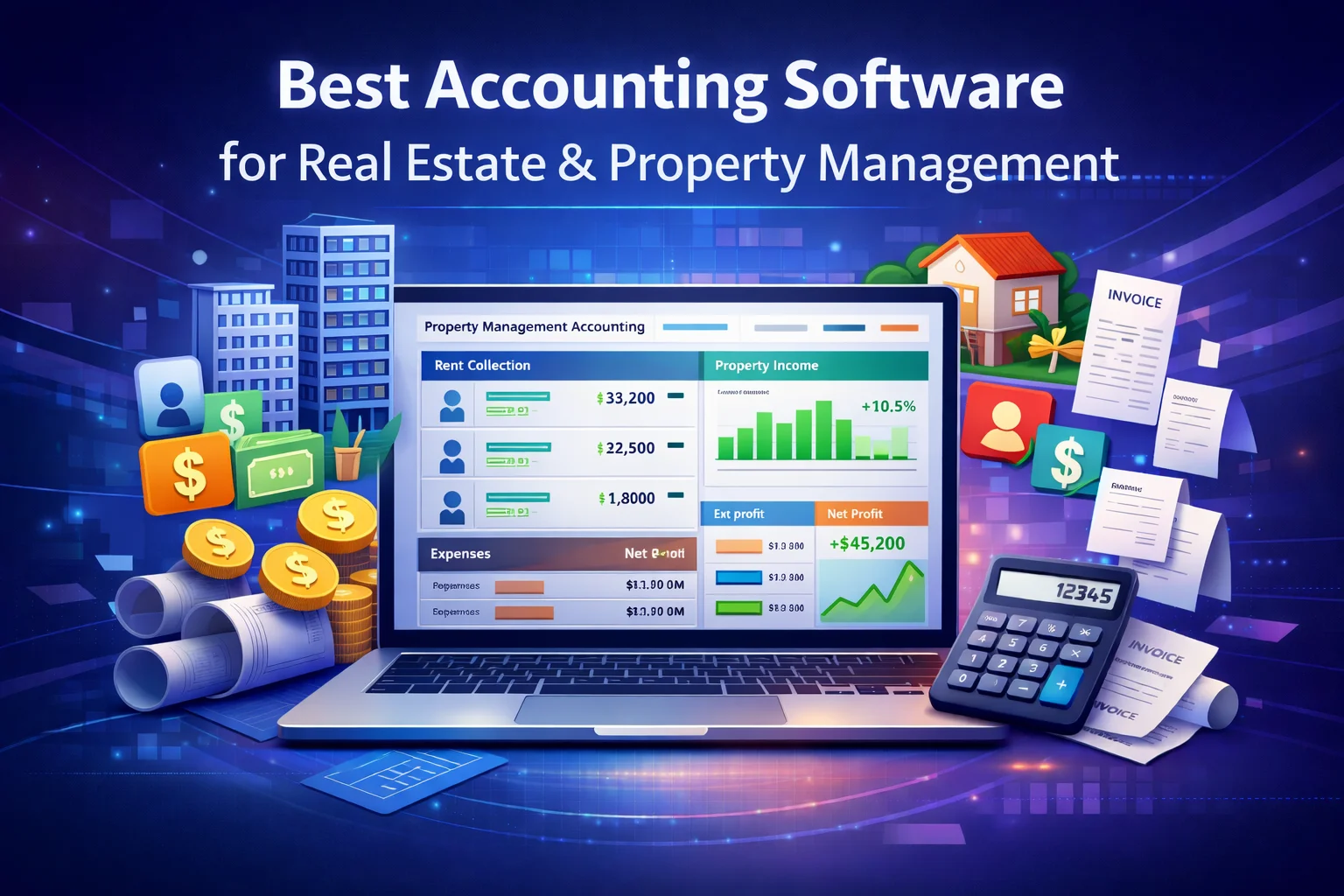
Modern real estate accounting software integrates these tasks into one system, allowing managers to automate rent payments, track expenses, and generate financial reports easily. Many platforms also provide tenant portals and financial dashboards to simplify operations.
Key Features to Look for in Real Estate Accounting Software
Before selecting a solution, it’s important to evaluate the features that matter most for property management.
| Feature | Why It Matters |
|---|---|
| Property-Level Accounting | Track income and expenses for each property |
| Automated Rent Collection | Simplifies rent payments and reduces late payments |
| Tenant & Owner Portals | Improves communication and financial transparency |
| Maintenance Expense Tracking | Tracks repairs and operational costs |
| Financial Reporting | Generates P&L statements, balance sheets, and cash flow reports |
| Bank Reconciliation | Automates transaction matching and bookkeeping |
| Tax & Compliance Reports | Helps prepare tax filings and financial documentation |
The best platforms combine accounting with property management features, creating a unified system for financial operations.
Best Accounting Software for Real Estate & Property Management
Based on industry research, user reviews, and feature comparisons, the following platforms stand out as the best options for real estate professionals.
1. Buildium – Best Overall Real Estate Accounting Software
Buildium is one of the most popular solutions for property managers because it combines accounting with complete property management functionality.
Key Features
- Automated rent collection and payment tracking
- General ledger accounting for properties
- Vendor and maintenance expense tracking
- Owner and tenant portals
- Financial reporting including profit & loss statements
Buildium offers an integrated accounting system designed specifically for property managers and landlords managing multiple properties.
Pros
✔ Easy to use interface
✔ Comprehensive financial reporting
✔ Excellent automation for rent payments
Cons
✖ Pricing increases as portfolio size grows
Best For
Property managers handling multiple residential or commercial units.
2. AppFolio Property Manager – Best for Large Property Portfolios
AppFolio is an enterprise-grade property management platform designed for large property management firms.
Key Features
- Integrated accounting with automated bank reconciliation
- Online rent collection and payment processing
- Owner distributions and financial reporting
- Vendor management and expense tracking
AppFolio integrates financial data with property operations to provide portfolio-level financial insights and automation.
Pros
✔ Highly automated workflows
✔ Advanced reporting tools
✔ Strong integration ecosystem
Cons
✖ Higher cost for small landlords
Best For
Large property management companies managing 100+ units.
3. Stessa – Best Free Accounting Software for Real Estate Investors
Stessa is a popular option among real estate investors because it focuses specifically on rental property accounting and financial tracking.
Key Features
- Automated expense tracking
- Bank account synchronization
- Property-level financial reporting
- Tax-ready income and expense reports
Many investors prefer Stessa because it helps track property profitability and provides insights into investment performance.
Pros
✔ Free basic version
✔ Excellent financial analytics
✔ Designed specifically for landlords
Cons
✖ Limited property management features
Best For
Independent landlords and small rental portfolios.
4. Rentec Direct – Best Value for Small Property Managers
Rentec Direct offers a strong balance between affordability and features for small to medium-sized property managers.
Key Features
- Integrated accounting system
- Owner and tenant portals
- Online rent payments
- Bank reconciliation and financial reports
It also includes trust accounting and automated owner distributions, which are critical for property managers handling client funds.
Pros
✔ Affordable pricing
✔ Good automation for rent payments
✔ Suitable for small portfolios
Cons
✖ Interface feels outdated compared to newer platforms
Best For
Landlords and property managers with 10–200 units.
5. Yardi Breeze – Best for Growing Property Management Companies
Yardi Breeze is part of the larger Yardi property management ecosystem and offers strong accounting functionality.
Key Features
- Trust accounting and budgeting tools
- Owner statements and reporting
- Online rent payments
- Portfolio-level financial management
Yardi platforms are widely used by real estate companies because they combine property management and accounting into one system.
Pros
✔ Reliable platform with strong accounting features
✔ Supports residential and commercial properties
✔ Scalable for growing portfolios
Cons
✖ Learning curve for new users
Best For
Medium-sized property management companies.
Comparison Table of Top Real Estate Accounting Software
| Software | Best For | Key Strength |
|---|---|---|
| Buildium | Property managers | Integrated accounting + management |
| AppFolio | Large portfolios | Automation and enterprise features |
| Stessa | Real estate investors | Free financial tracking |
| Rentec Direct | Small property managers | Affordable and functional |
| Yardi Breeze | Growing companies | Scalable property accounting |
Pricing Overview
| Software | Estimated Cost |
|---|---|
| Stessa | Free basic plan |
| Rentec Direct | $45+/month |
| Buildium | $50+/month depending on units |
| Yardi Breeze | ~$1 per unit per month |
| AppFolio | Custom pricing |
Prices vary depending on portfolio size, number of units, and additional features.
Benefits of Using Real Estate Accounting Software
Adopting the right accounting software can significantly improve financial management.
1. Better Property-Level Financial Visibility
Track profit and expenses for each property separately.
2. Automated Rent Collection
Online payments reduce late payments and manual processing.
3. Accurate Financial Reporting
Generate reports such as:
- Profit & Loss statements
- Cash flow reports
- Balance sheets
- Owner statements
4. Simplified Tax Preparation
Real estate accounting software automatically categorizes transactions and generates tax-ready reports.
5. Improved Efficiency
Automation reduces administrative workload and manual bookkeeping.
Pro Tips for Choosing the Right Software
Consider Portfolio Size
- 1–10 units: Stessa
- 10–100 units: Rentec Direct or Buildium
- 100+ units: AppFolio or Yardi
Evaluate Automation Features
Automation for rent collection, expense tracking, and reporting can save dozens of hours per month.
Check Integrations
Ensure your accounting software integrates with:
- Payment processors
- CRM platforms
- tax software
- banking systems
Common Mistakes When Choosing Real Estate Accounting Software
❌ Choosing generic accounting software without property-level tracking
❌ Ignoring scalability as your property portfolio grows
❌ Overpaying for enterprise tools when managing a small portfolio
❌ Not considering automation features like rent collection
Choosing the right software early can prevent expensive system migrations later.
Frequently Asked Questions
What accounting software do real estate investors use?
Popular choices include Buildium, Stessa, AppFolio, Rentec Direct, and Yardi Breeze. These platforms provide property-specific accounting features such as rent tracking, owner distributions, and financial reporting.
Is QuickBooks good for real estate accounting?
QuickBooks can work for small real estate businesses, but it lacks built-in property management features like tenant portals and rent automation unless integrated with additional tools.
What features should property management accounting software include?
Key features include property-level accounting, automated rent collection, maintenance expense tracking, financial reporting, and owner portals.
How much does property management accounting software cost?
Pricing ranges from free tools like Stessa to enterprise platforms costing hundreds of dollars per month, depending on the number of units and features required.
Can landlords use free accounting software?
Yes. Some platforms offer free versions specifically designed for real estate investors, making them suitable for small portfolios.
Final Thoughts
Managing real estate finances requires more than traditional accounting tools. Specialized software helps landlords and property managers track rent payments, expenses, owner distributions, and property profitability with accuracy and efficiency.
Here’s a quick summary:
- Best overall: Buildium
- Best for large portfolios: AppFolio
- Best free solution: Stessa
- Best value: Rentec Direct
- Best scalable platform: Yardi Breeze
Choosing the right accounting software helps real estate professionals streamline operations, maintain accurate financial records, and maximize profitability.